Unify vs Letterdrop: Which Outbound Platform Is Right for You?

Modern outbound tools promise the same thing: more pipeline without more spam.
Both Unify GTM and Letterdrop try to solve this by combining intent signals with AI-assisted outreach.
Where they differ is what signals they prioritize and how far they take you from signal → meeting.
This guide breaks it down.
What Unify Does Well
Unify positions itself as an all-in-one outbound execution layer.
It’s designed for teams that want intent, enrichment, and outbound sequencing inside a single system.
Core strengths:
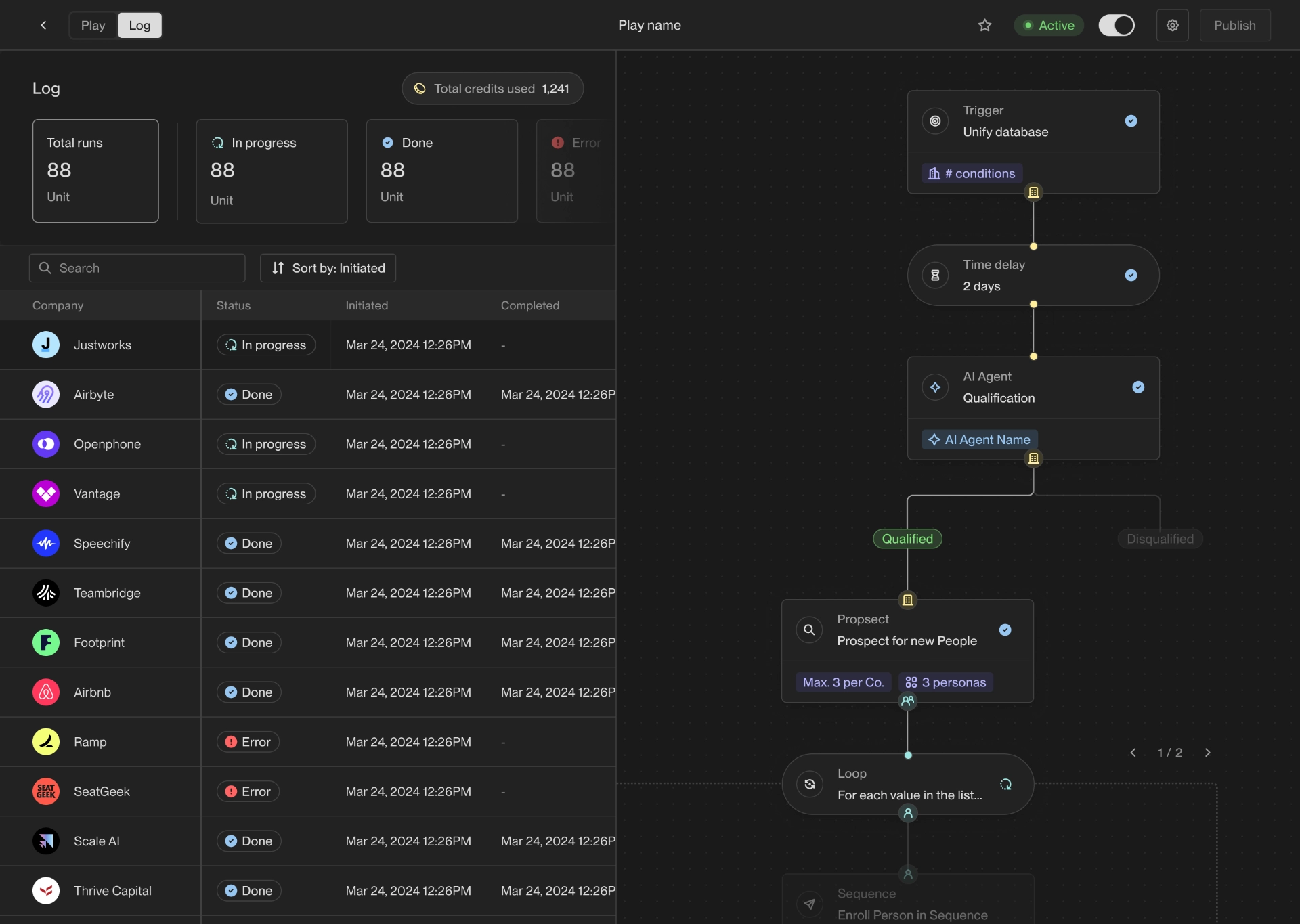
- Account-level intent aggregation: Pulls together website activity, product usage, job changes, and third-party intent to highlight accounts that may be in-market.
- Built-in contact enrichment: Surfaces emails and basic firmographic data without needing a separate data provider.
- Native outbound sequences: Lets teams send AI-assisted email sequences directly from Unify, including follow-ups and task prompts.
- Structured “plays” for RevOps: Good fit for teams that want centralized control over outbound logic and reporting.
Best fit:
Product-led or data-heavy teams that already think in accounts first, and want outbound execution tightly coupled to internal signals.
Where Unify Starts to Break Down
Unify is strong on internal and account-level intent. It’s weaker when intent shows up outside your systems.
Common gaps teams run into:
- You know an account is active, but not who is actually involved
- You miss buyers talking openly about problems, alternatives, or vendors
- Outbound stays transactional, not relationship-driven
- No real motion for warming buyers before outreach begins
That’s where Letterdrop takes a different approach.
How Letterdrop Is Different
Letterdrop is built around contact-level intent and social selling, not just outbound execution.
Instead of starting with accounts, it starts with real people showing buying behavior in public.
What Letterdrop Adds
1. Contact-level intent from the open web
Letterdrop detects buyers who:
- Talk publicly about problems you solve
- Ask for vendor recommendations
- Engage with competitors
- Interact with influencers or your team
You get names, context, and timing, not just a logo.
2. Signal-driven message drafting
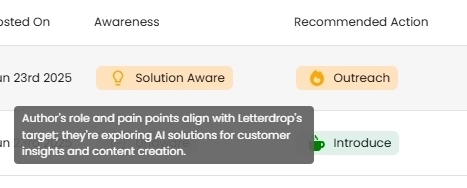
When a signal appears, Letterdrop:
- Pulls the exact public conversation or data
- Drafts a context-aware message for review
- Routes it to the right rep or system
No generic “AI first line.” The message is anchored in what the buyer actually did.
3. Built-in nurture via thought leadership
Letterdrop doesn’t just help you reach out.
It helps you stay visible.
Teams use it to:
- Turn sales calls into social posts
- Keep execs and reps posting consistently
- Warm target accounts before direct outreach
This makes outbound feel familiar, not interruptive.
4. Works with your existing stack
Instead of replacing your tools, Letterdrop plugs into them:
- CRM (Salesforce / HubSpot)
- Sales engagement tools (Apollo, Outreach)
- Slack and Clay
It acts as the signal and context layer on top of what you already run.
Letterdrop vs Unify
| Area | Unify.ai | Letterdrop |
|---|---|---|
| Primary focus | Account-level outbound execution | Contact-level intent + social selling |
| Intent signals | Website, product, firmographic data | Public conversations, engagement, social activity |
| Who you see | Accounts heating up | Real people showing intent |
| Message quality | AI-generated personalization | Signal-anchored, context-driven drafts |
| Nurture | Limited | Core part of the product |
| Stack philosophy | All-in-one | Works alongside existing tools |
Which One Should You Choose?
Choose Unify if:
- You’re heavily PLG or account-centric
- You want outbound fully centralized in one system
- Most of your buying signals are internal or first-party
Choose Letterdrop if:
- You believe buying intent leaks out in public
- Social channels matter to your ICP
- You want warmer conversations, not just more volume
- You care about trust, familiarity, and timing
The Verdict
Unify helps teams execute outbound better.
Letterdrop helps teams notice buyers earlier, interact with them more naturally, and build trust before the pitch.
If your pipeline pressure is coming from declining reply rates and colder outreach, Letterdrop’s approach tends to compound faster, because it’s rooted in real buyer behavior, not just predictive scores.
Subscribe to newsletter
No-BS GTM strategies to build more pipeline in your inbox every week
Related Reading
Some other posts you might find helpful