Unify vs 6Sense

Teams comparing Unify and 6sense are usually trying to answer a difficult operational question:
How should sales know when to act, and what should trigger that action?
Both platforms surface intent signals, but they rely on very different data foundations and are designed for very different GTM motions. Understanding that distinction is critical before making a long-term investment.
What Unify Is Designed to Do
Unify is built around product usage and lifecycle signals.
It connects directly to your product, CRM, and data warehouse to turn internal events into actions. Typical signals include:
- feature adoption milestones
- trial behavior
- usage spikes or drops
- expansion and churn risk indicators
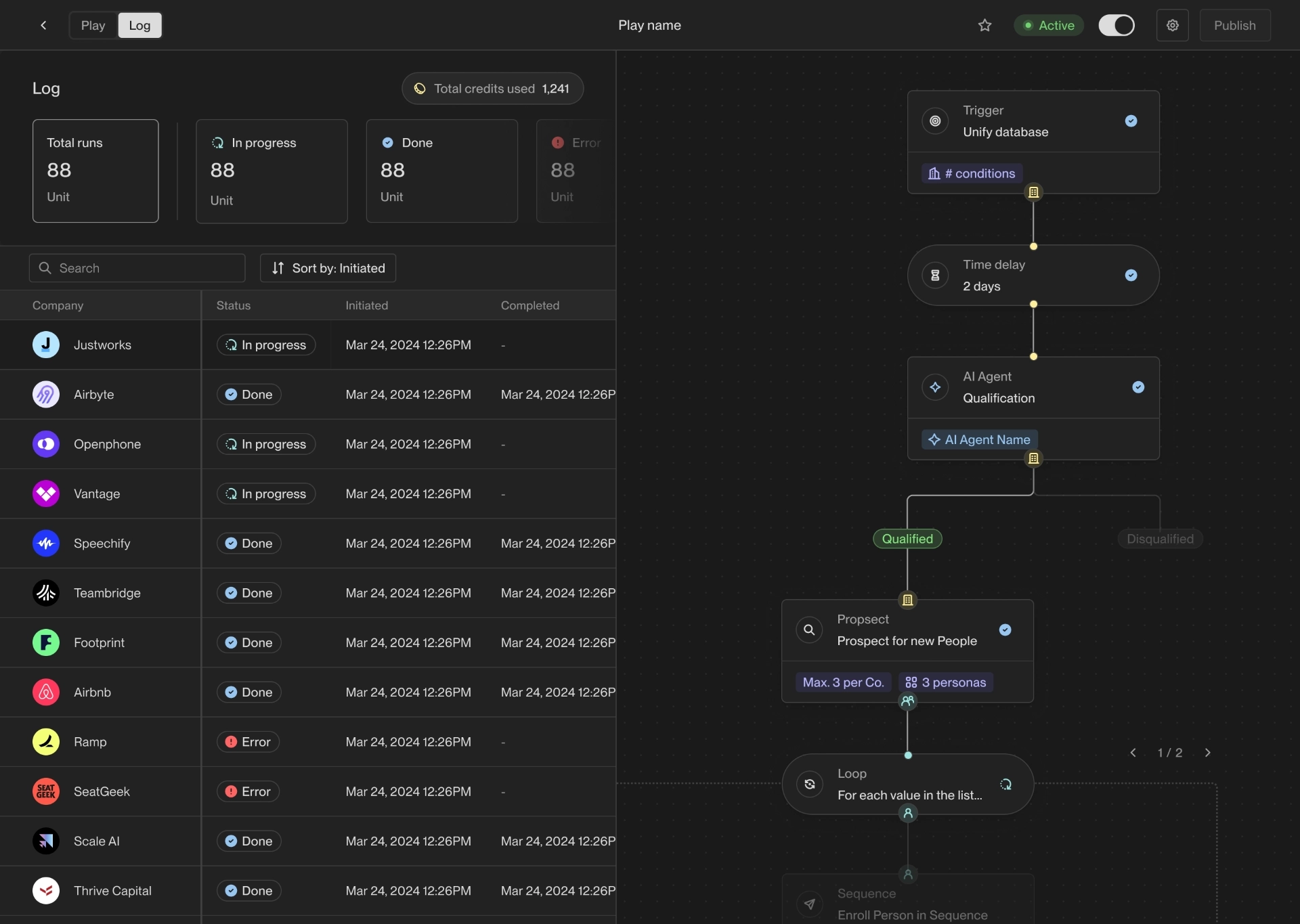
Unify helps teams:
- identify product-qualified leads
- trigger timely sales or customer success actions
- coordinate PLG conversion and expansion plays
Unify works best when:
- product usage is a primary buying signal
- sales timing depends on in-product behavior
- teams want deterministic triggers tied to real usage
In short, Unify is strongest after a buyer is already using your product.
What 6sense Is Designed to Do
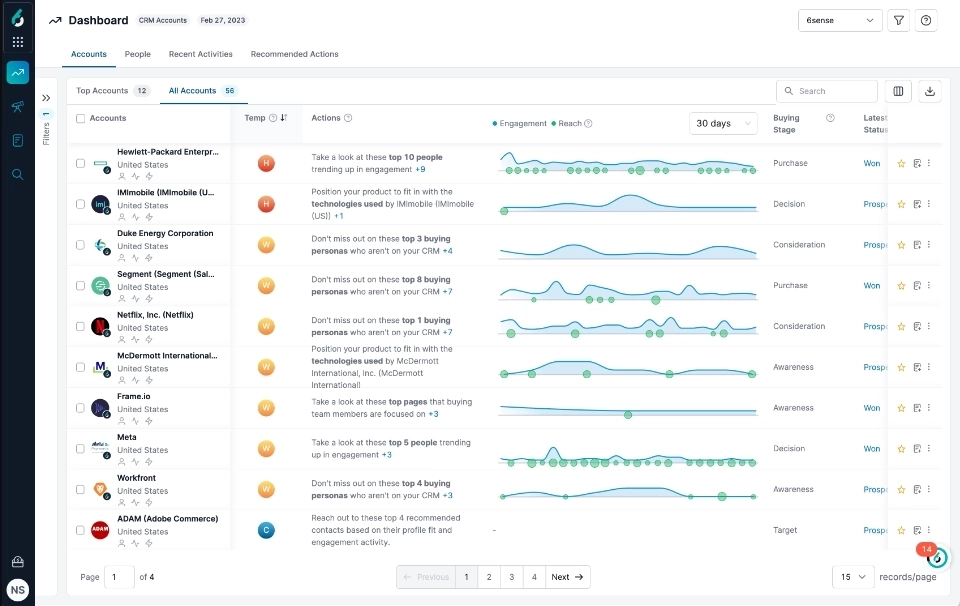
6sense is an account-based intent and orchestration platform.
It aggregates large volumes of first- and third-party data to predict which accounts are moving through a buying journey, often before any direct interaction.
6sense excels at:
- scoring and prioritizing accounts
- supporting ABM and demand programs
- aligning marketing, SDRs, and sales around a shared account view
- orchestrating ads and outreach at scale
6sense is typically adopted by:
- large B2B organizations
- marketing-led revenue teams
- companies selling complex, multi-stakeholder deals
Where Unify and 6sense Both Have Limits
Despite different strengths, Unify and 6sense share an important constraint.
Both platforms rely on aggregated or internal signals:
- product usage
- website research
- predictive account behavior
Neither platform is built to:
- surface early public buying conversations
- identify which individual inside an account is driving evaluation
- provide context for why interest exists right now
- support first-touch outreach with concrete buyer context
As a result, sales teams often still face:
- delayed awareness of buying moments
- generic outreach when timing matters most
- reliance on guesswork for first conversations
This gap is especially visible in competitive or fast-moving markets.
Where Letterdrop Closes the Gap
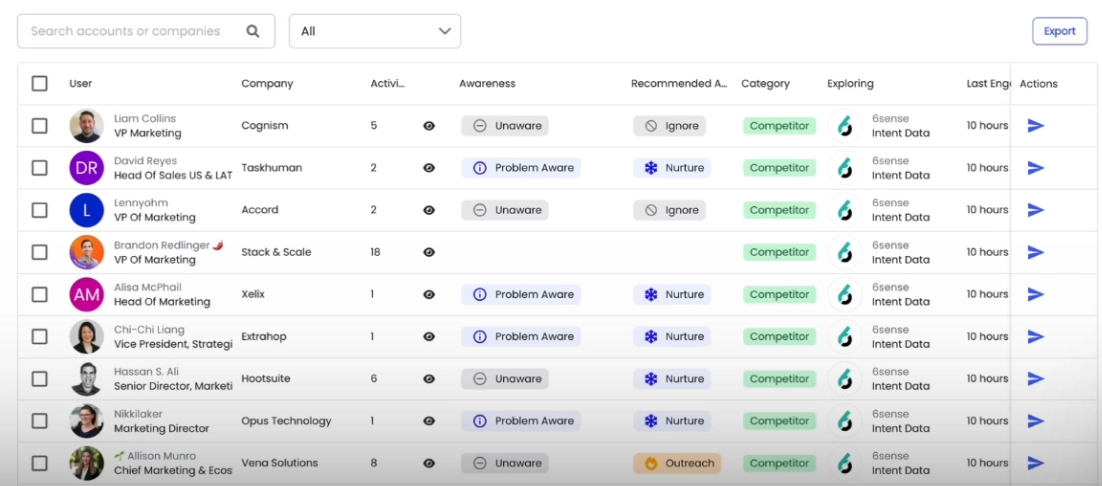
Letterdrop focuses on external, contact-level buying intent that appears before product usage or predictive scoring, including:
- individuals discussing problems relevant to your category
- buyers comparing alternatives or vendors
- renewed intent from previously stalled or closed-lost opportunities
Instead of abstract scores or internal triggers, Letterdrop:
- identifies the individual showing interest
- classifies buyer awareness stage
- drafts context-specific outreach for review
- routes messages into existing sales workflows
This enables teams to act earlier, with clearer context, and with less reliance on inference.
Unify vs 6Sense vs Letterdrop
| Dimension | Unify | 6sense | Letterdrop |
|---|---|---|---|
| Primary signal source | Product usage | Account-level intent | Public buyer activity |
| Buyer visibility | Active users | Accounts | Named individuals |
| Timing | Post-usage | Mid-funnel | Pre-inbound |
| Sales usability | Trigger-based | Strategic prioritization | Immediate outreach context |
| Outbound support | Limited | None | Drafted and routed |
| Best use case | PLG conversion and expansion | Enterprise ABM | Early conversations |
Final Thoughts
Final Thoughts
Unify and 6sense are powerful when signals already exist.
Unify excels once buyers are active in your product.
6sense excels when marketing needs to prioritize accounts at scale.
If your challenge is seeing buying intent before either of those signals appear, you need a contact-level view of the market.
That is where Letterdrop fits.
Subscribe to newsletter
No-BS GTM strategies to build more pipeline in your inbox every week
Related Reading
Some other posts you might find helpful